🗓️
Aug 24, 2025
Greece Through The Stone Lens
Although many of the temples had long since fallen, their stone reclaimed by passing civilizations and time, the heart of Delphi still stood—not the most monumental structure, but rather, a simple amphitheater intact and enduring.
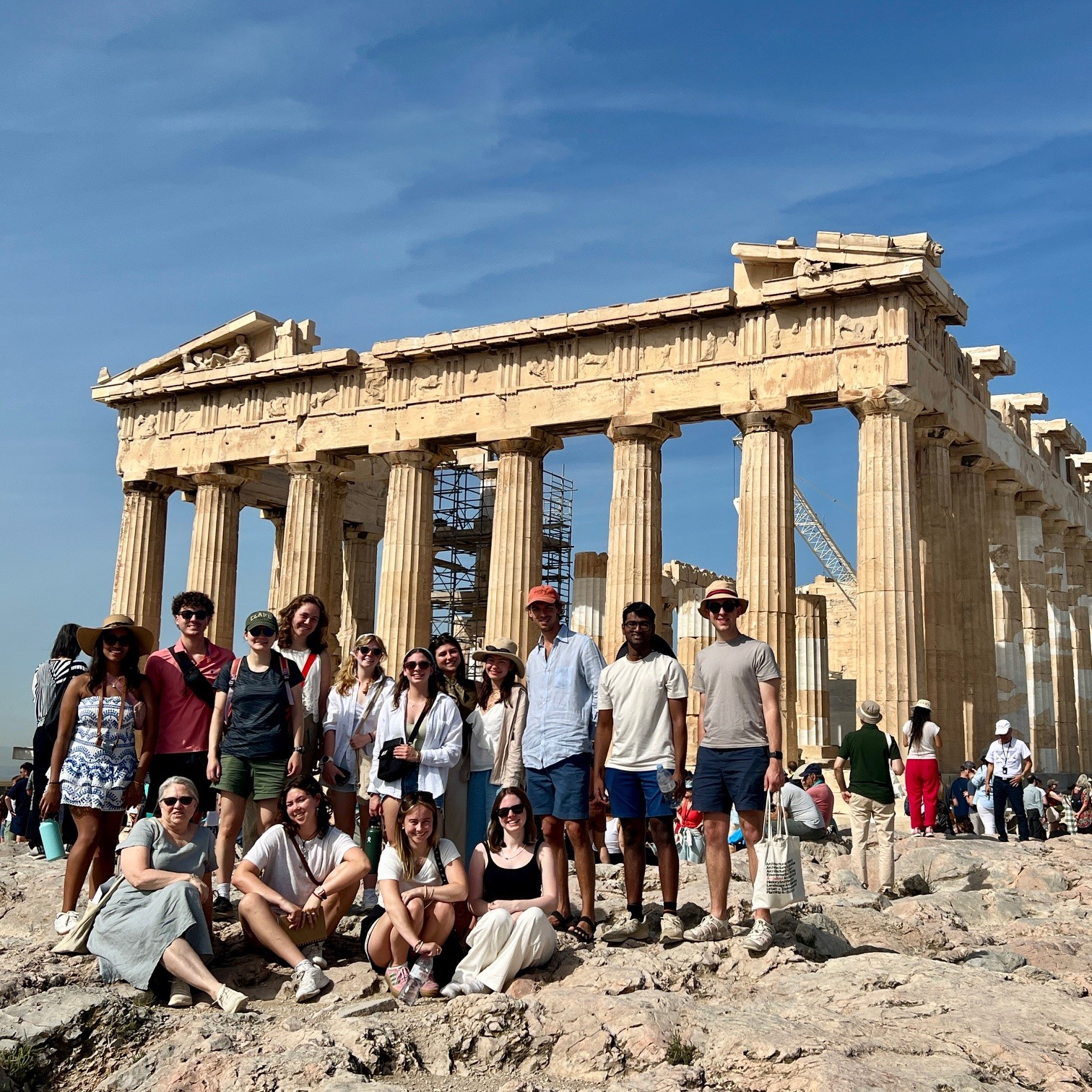
Over the summer, I had the opportunity to travel to Greece as part of an architecture- and sustainability-focused study abroad program Odyssey in the Anthropocene led by professors Phoebe Crisman and Michael Petrus. What began as an academic experience quickly became something more expansive. That initial observation at Delphi stayed with me and began to shape how I moved through the places we visited, how I listened, and what I observed. Slowly, it developed into a way of seeing that I’ve come to think of as through the Stone Lens.
As we traveled through cities, coastal towns, monasteries, and islands, patterns emerged. Amphitheaters endured. So did stone cisterns that still collected water, narrow streets that remained shaded and walkable, and urban forms that felt remarkably legible centuries later. What lasted was rarely the most expressive or grand like temples and monuments. It was architecture shaped by necessity, climate, community, and care.
That realization came into focus most clearly in Monemvasia, where I presented on how the town’s architecture evolved over time. Even as empires shifted, materials changed, and uses adapted, the foundational systems themselves persisted when they were grounded in place and built for the people who relied on them. What we now call sustainable design did not emerge from abstraction, but from working honestly within limits.
Somewhere along the way, architecture stopped feeling like an end goal and began to feel like a framework. Less about what is produced, and more about how one thinks: how systems are read; how decisions ripple outward over time; how meaning emerges not from spectacle but from alignment between intention and reality.
But Greece reshaped more than my academic thinking. It marked a turning point in how I understand myself. Over those weeks, surrounded by unfamiliar landscapes and long conversations, I became more aware of what gives my work meaning and direction: connection—to people, places, and work that feels grounded rather than performative. Some moments stay with you not because they were loud, but because they revealed something true, and Greece had a way of making those moments unavoidable.