🗓️
Oct 25, 2025
Challenging the Compact for Academic Excellence
When the Compact for Academic Excellence in Higher Education was released mid-semester, I became directly involved in student efforts to assess it and advise against the University’s participation.
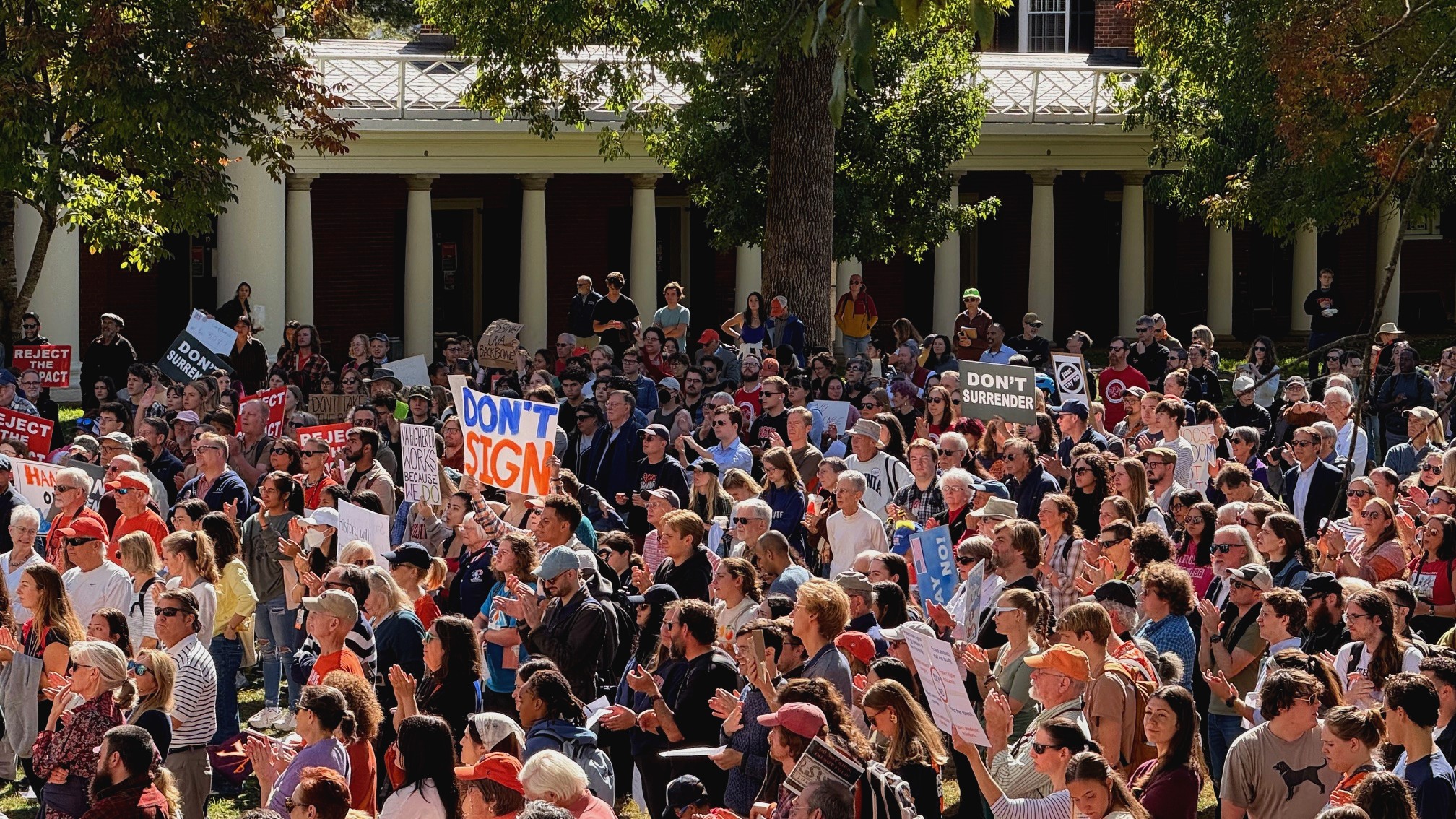
The Compact, distributed to several major U.S. universities, proposed expanded federal funding and partnerships in exchange for a series of conditions tied to admissions practices, governance, tuition, protest, and academic policy. While the document invoked shared language around free expression and institutional values, its structure raised fundamental questions about academic independence and the role of external authority in shaping higher education.
On October 6, I attended an emergency town hall convened by the School of Architecture, where students and faculty expressed concern about how the Compact’s provisions could affect academic freedom, admissions practices, and institutional autonomy. Shortly thereafter, I was invited to participate in an emergency Council of the Presidents meeting on October 8, where student leaders, faculty, and CIO presidents discussed the broader implications of the proposal and how student perspectives could be represented.
That same week, I began working with members of the Presidential Student Advisory Council to draft a letter to Interim President Paul Mahoney advising that the University should not sign the Compact. The letter emerged from close reading of the document and conversations with students across Grounds, and it was grounded in the belief that agreements tying preferential funding to governance and admissions conditions risked undermining the University’s core mission.
One passage from the letter captured the heart of that concern:
"Preferential funding is not funding; it depends on discretionary federal choices […] and it exposes the University’s planning to political risk rather than academic judgment."
By October 13, the letter had been signed by eleven members of the council and delivered to Madison Hall, where it was acknowledged by the President’s Office the following day.
The University ultimately declined to sign the Compact before the stated deadline, joining several peer institutions in rejecting the proposal. In a statement released on October 17, Interim President Mahoney explained that while the University shares many of the principles referenced in the Compact, it does not seek preferential treatment tied to contractual conditions that could compromise the integrity of research, scholarship, or governance.
Being part of this process—from listening at emergency forums to helping articulate a collective student position—was one of the most intensive moments of engagement I experienced this semester. It underscored how quickly national policy conversations can intersect with campus life, and how important it is for student voices to be informed, deliberate, and present when those intersections arise.